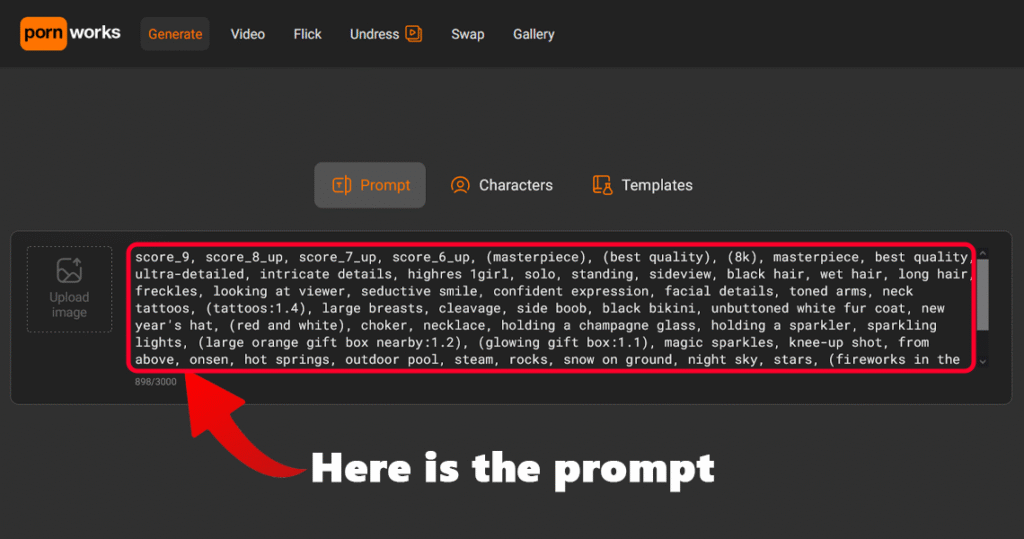
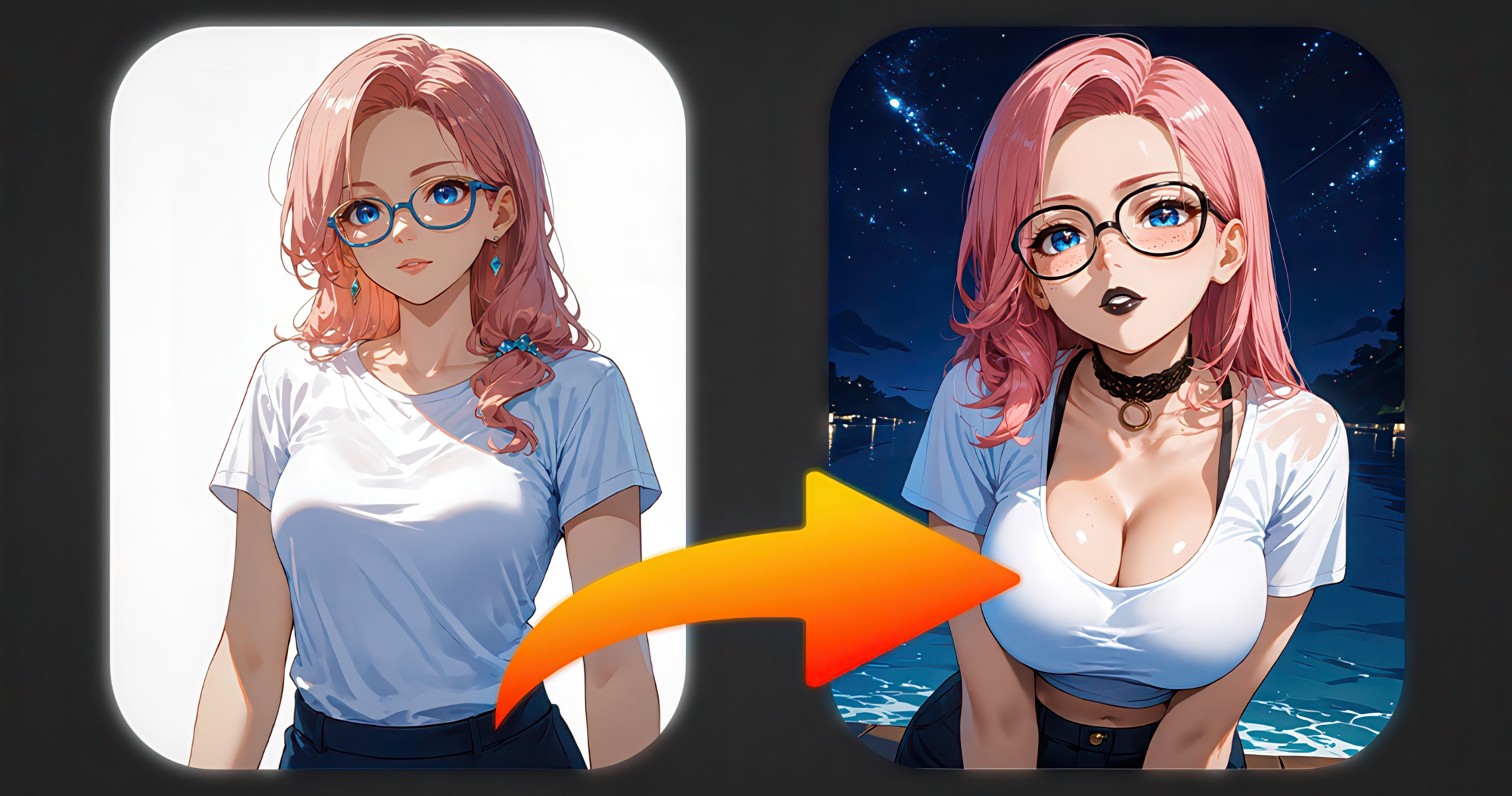
PornWorks AI: Guide to Prompts and LoRA 2026

What Are AI Image Prompts and Why They Matter

AI image prompts are the foundation of every strong generation in PornWorks AI. The better your prompt structure, word order, model logic, and LoRA setup are, the faster you get accurate images instead of random results. In this guide, we’ll show how to write better prompts for FLUX, Pony, Illustrious, and Lux Nude People, how to use LoRA templates, and how to avoid the mistakes that waste credits.

Images are not created out of thin air — it all starts with text, a request, a prompt for the neural network.

We often don’t pay enough attention to the text request, and we shouldn’t. Today, it’s not just a set of enhancement tags or random words, because modern engines like FLUX and Illustrious require a different approach.

In this article, we will analyze the «golden formula» of prompts and professional techniques that will make AI understand you at a glance.

This article will help you:

  • Improve the quality of your work
  • Achieve results faster
  • Get more accurate images

Let’s get started!

What is prompt engineering?

Prompt engineering for AI image prompts means giving the model a clear structure: subject, scene, pose, camera angle, style, lighting, and technical details.

Prompt engineering involves composing a text query with the aim of obtaining the highest quality and most accurate result. In the latest models, this is a strict logical structure, rather than a chaotic search through words.

Instead of relying on chance, you build your query in layers: you control the model’s attention and use technical add-ons and LoRA templates. What is LoRA models?

The Most Important Rule: Word Order in AI Image Prompts

For neural networks, word order is critical: tokens at the beginning of a query have the greatest «weight». That is, the neural network pays more attention to them, and the further left a word is, the higher its priority.

Therefore, an effective query is structured like a two-layer cake:

  • macro control (composition)
  • micro control (details)

Macro control

The first 5–10 tokens set the overall structure. If you specify the details of the face at the beginning and the shooting plan at the end, the neural network may ignore the scale.

⚙️ Technique: First, assemble the «framework»: who, where, in what pose, and what angle (close-up, full body)

👉 Example:

A young woman running in the rain, futuristic megapolis, cinematic wide shot…

Micro control

After creating the base, add details: materials, lighting, textures, wearing, atmosphere, style of painting,

👉 Example:


…latex bodysuit, neon reflections on wet asphalt, intricate tattoos, hyper-detailed eyes.

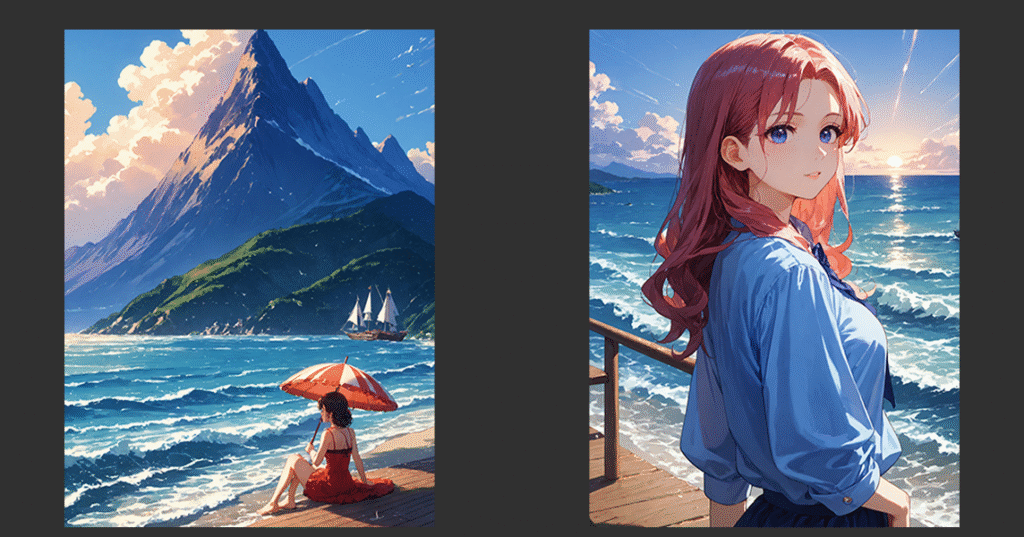
Let’s take a look at the difference clearly

score_9, score_8_up, score_7_up, 1girl, large area, ocean, seashore, mountains on the horizon, detailed night sky, waves crashing on the shore, Vietnamese resort, ships, pier, beach umbrellas, beautiful nature and scenery

Let’s summarize: first, the main elements: character, appearance, scene, pose. Finally, everything else: style, frame, drawing, details.

The Double Think Technique for FLUX Prompts

The FLUX model uses two «brains» — text encoders — and understanding the difference between them is very important for quality:

  • CLIP visual encoder: understands short tags separated by commas: silver hair, blue eyes. Responsible for specific objects and colors.
  • T5 semantic encoder: understands natural speech and complex connections: a girl laughing under the rain at golden hour. It helps AI understand the atmosphere and “plot” of the frame.


Therefore, in order for the neural network to understand both the plot and the details at the same time, divide the prompt into two parts:

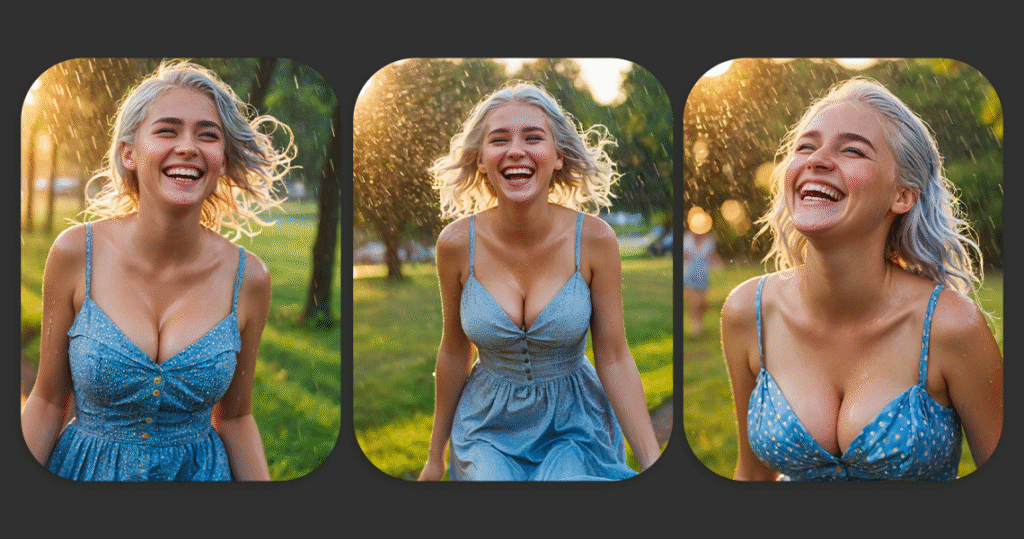
A girl laughing under the rain at golden hour in a park (I) + silver hair, blue eyes, wet skin, sundress, hyper-detailed, cinematic lighting (II)

Why do this: if you only use tags, FLUX may get confused by complex relationships between objects. If you only use natural language, specific minor details may get lost.

💡 Tip: To keep the focus clear, duplicate the key object in both styles — with tags and with a description.

How to Write Prompts for Pony, Illustrious, FLUX, and Lux Nude People

Different checkpoints in PornWorks AI «speak» different dialects:

모델

Key feature

Prompt tips

Pony models

Scoring

Start with: score_9, score_8, rating_explicit. Do not use “masterpiece.” Use danbooru tags.

Anime Desire, Illustrious

Scenario

Describe the relationship: shy girl teased by coworker, anime style, dynamic angle. Use more short tags 에서 the table and also use danbooru tags.  

Lux Nude People, FLUX

Native language

Instead of using negative words in the prompt, write positively. For example, instead of “no text,” write “clean background, no signage.”

LoRA templates: fine-tuning style

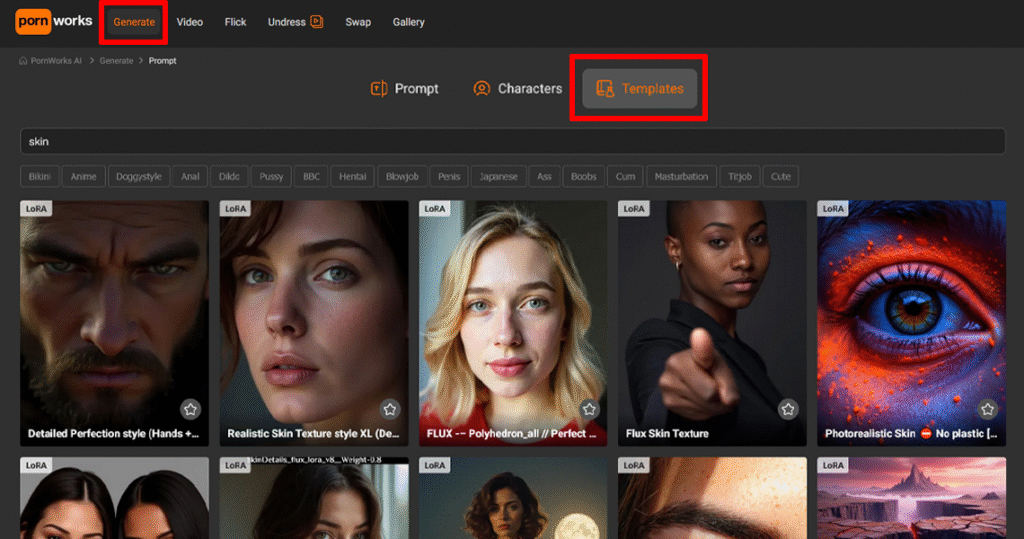
LoRA (Low-Rank Adaptation) are micro-models for fine-tuning that allow AI to match specific styles or characters without changing the main base.

LoRA templates work best when the base AI image prompt is already stable. Do not use LoRA as a crutch for a weak prompt.

  • Weights: Optimally 0.5–0.7. A weight of 1.0 often “burns” the image.
  • Layers: Use LoRA not only for faces, but also for controlling light or poses.
  • Logic: First, achieve the desired base with text, and only at the end add LoRA as a final filter.


🔖 Detailed article about LoRA templates with examples

Iteration method

To save credits and time, do not change the entire request.

Use branching:

  1. Create a basic «core» that gives a stable result.
  2. Make 3 copies, changing only one parameter:
  • Branch A: Light. Sunset — neon
  • Branch B: Angle. Front — back
  • Branch C: Style. Photo — art


This way, you will find the sweet spot without losing the successful composition.

Common mistakes

  • Junk tokens: a short and precise prompt based on the formula > a long, cumbersome prompt that is difficult to understand. Size matters, so don’t clutter the context window, as this distracts the AI from the essence.
  • Giant negatives: Huge lists (sheets) of negative words confuse modern models. For PonyXL, bad anatomy, extra fingers, blurry is enough — the model already knows what poor quality is.
  • Clip Skip: For Pony family models, it is important to set Clip Skip: 2, otherwise the AI may misinterpret complex requests.


Conclusion: Build Better AI Image Prompts in PornWorks AI

The art of prompts in 포르노웍스 AI is a balance between clear planning of the «skeleton» and flexibility in the details. By understanding the difference between CLIP and T5 and skillfully using LoRA, you will move from random images to conscious creativity.

Your next step: Try rebuilding your best prompt using the “Macro + Micro” principle and see the difference in detail!

And join our challenges on Discord. We have both weekly and daily events in the image and video categories. You can win credits, PRO subscriptions, recognition, and sometimes even money.