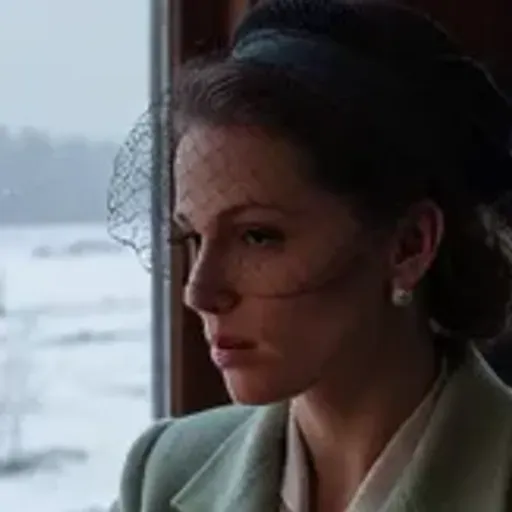
Girl on the Orient Express
February 1934, somewhere between Budapest and Istanbul. The Orient Express cuts through a frozen landscape — vast snow-covered plains, bare black trees, a leaden sky at dusk.
Inside the wagon-restaurant, a woman in her early thirties sits alone at a table set for one. She wears a sage-green wool travel suit, a small hat with a dark veil pushed back, pearl earrings. Beside her, an open novel face-down on the white tablecloth. She is not reading.
She reaches toward the brass samovar at the center of the table, fills her cup with slow deliberate gestures. The steam catches the light of the table lamp — the only warm light in the carriage. Outside the frosted window, nothing but white.
A door opens at the far end of the wagon. She does not turn around. Her fingers tighten slightly on the cup.
Close-up, the samovar surface, curved and reflective, distorting the image of the carriage behind her. Someone is standing there. Or was.
Style, the visual atmosphere of early BBC Agatha Christie adaptations — muted greens and creams, heavy fabrics, the particular stillness of enclosed spaces in winter. Grain, softness, no sharp edges. Mood, a woman who knows something. Or suspects something. Or is herself the thing to be suspected.